Contract for the sale of goods in Viet Nam is becoming more and more popular. So, the contracting parties should understand legal issues relating to a contract for the sale of goods. Especially, time of risk transfer is one of the most critical legal issues that buyers/sellers need to know when entering into an international contract for the sale of goods. In particular, the parties are often based on Incoterm conditions to determine the time of risk transfer in the international contract for the sale of goods according to Incoterm conditions. So, what is the risk transfer and when does risk transfer from the seller to the buyer? In this article, Apolo Lawyers - Solicitors & Litigators (Tel: (+84) 903.419.479) will answer these questions.
It is essential for the buyer and the seller to know time of risk transfer in the international contract for the sale of goods in Incoterms 2020 so that they can ensure their rights and benefits when entering into the international contract for the sale of goods.
A transfer of risk is a business agreement in which one party pays another to take responsibility for mitigating specific losses that may or may not occur.
When entering into the contract, the parties often agreed on the time of risk transfer. However, in the case that the parties have no agreement when the risk transferred from the seller to the buyer, it will be based on the provisions of law.
Moreover, it is very important to know the difference between the time of transfer of ownership and the time of risk transfer. In some case, the time of transfer of ownership is not the time of transfer of risks.
The Incoterms are a set of international commercial terms including 11 individual rules issued by the International Chamber of Commerce (ICC) which define the responsibilities of sellers and buyers for the sale of goods in international transactions. Of primary importance is that each Incoterms rule clarifies the tasks, costs, and risks to be borne by buyers and sellers in these transactions.
Incoterm 2020 includes the conditions of use for one or more modes of transport and conditions apply to sea transport and inland waterway transport
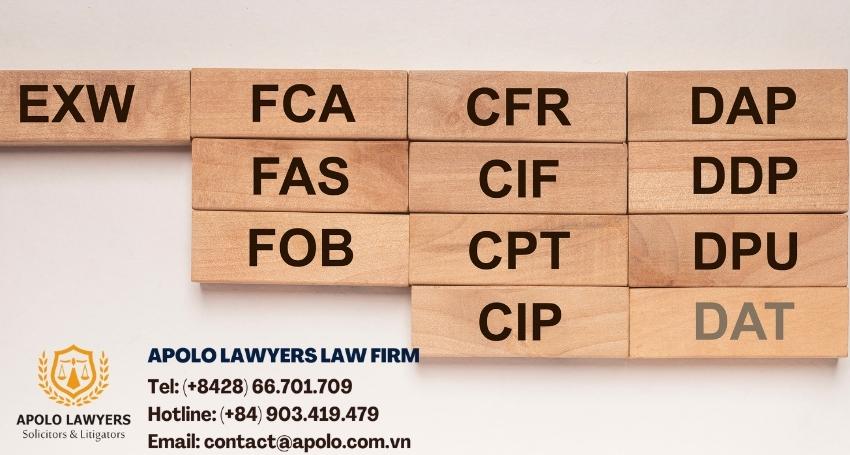
As for the group of delivery terms for one or more modes of transport, according to Incoterms 2020, 7 conditions are listed, specifically:
EXW – Delivered at the factory
FCA – Delivering the goods to the carrier
CPT – Fees to be paid to
CIP – Fees and insurance paid up to
DAP – Delivery at destination
DPU – Delivery at unloading place
DDP – Delivery cleared for import
Terms and conditions apply to sea transport and inland waterway transport
For the group of conditions applicable to sea transport and inland waterway transport, according to Incoterms 2020, four conditions are listed, specifically:
FAS – Side-by-side delivery
FOB – Delivery on board
CFR – Freight and freight
CIF – Cost of goods, insurance and freight
The Incoterms 2020 rules are updated and grouped into two categories reflecting modes of transport. Of the 11 rules, there are seven for any mode(s) of transport and four for sea or land or inland waterway transport.
In Incoterms 2020, the time of risk transfer is specifically listed in each of the conditions of use for one or more modes of transport, specifically:
The seller bears all risks of loss of or damage to the goods until they are delivered to the buyer, and the buyer begins to bear all risks from the time the goods are delivered.
Risk is transferred when the seller delivers the goods to the buyer when the goods are placed at the disposal of the buyer at a named place (factory or warehouse), and the named place may be the premises of seller or are not.
The buyer bears all risks of loss of or damage to the goods from the moment they are delivered and the risks pass from the time the seller delivers the goods to the buyer at the named place for delivery
CPT means that the seller delivers the goods to the buyer – and the risk of the goods is transferred to the buyer when the goods are delivered to a carrier hired by the seller or the seller purchases such consignment for delivery for the buyer.
CIP means that the seller delivers the goods to the buyer – and the risk of the goods is transferred to the buyer when the goods are delivered to a carrier hired by the seller or the seller purchases such consignment for delivery for the buyer.
DAP means that the seller delivers the goods to the buyer – and transfers the risk of the goods to the buyer when the goods are placed at the disposal of the buyer on the arriving means of transport and ready for unloading at the place of nominated destination.
DPU means that the seller delivers the goods to the buyer – and transfers the risk of the goods to the buyer as soon as the goods are unloaded from the arriving means of transport and placed at the disposal of the buyer at the place of nominated destination .
DDP means that the seller delivers the goods to the buyer when the goods, which have cleared customs for importation, are placed at the disposal of the buyer on the arriving means of transport and are ready for unloading at the named destination. .
The seller bears all risks of loss of or damage to the goods in order to bring the goods to the named destination.
The risk of loss of or damage to the goods is transferred when the goods are placed alongside the vessel, and the buyer bears all costs from that point on.
The risk of loss of or damage to the shipment passes when the goods are placed on board the vessel, and the buyer bears all costs from that point on.
Risk of loss of or damage to the shipment passes when the goods are placed on board the ship, at which point the seller fulfills his obligation to deliver regardless of whether the goods arrive at the port of discharge in good condition and complete or not.
>>> Read more: Procedures for foreign investment in Vietnam
>>> Read more: Establish a representative office or branches of foreign company in Viet Nam
The risk of loss of or damage to the shipment passes when the goods are placed on board the ship, at which point the seller fulfills his obligation to deliver regardless of whether the goods arrive at the port of discharge in good condition and complete or not.
Thus, the time of risk transfer when buying and selling goods depends on the conditions that businesses choose to implement.
Apolo Lawyers is confident in supporting Clients who have problems with commercial contract, including the following:
Consulting on how to draft the contract that satisfies the provisions of Vietnamese Law about contracts to reduce the risks;
Consulting to determine the basis for dispute settlement and legal basis for dispute settlement;
Consulting, and preparing to contact and negotiate with related parties in the settlement of international contract sale of goods disputes;
Guiding clients to collect documents and evidence, and provide information;
Authorized representative lawyers meet and discuss with Arbitration, Courts, and judgment enforcement agencies to protect the legitimate rights and obligations of clients
Commercial contract in Viet Nam is often drafted and agreed upon based on Incoterm 2020. If you have any questions about the contract and need a lawyer to consult on drafting the contract and advisee on choosing the terms to use when entering into the contract, please contact Apolo Lawyers - Solicitors & Litigators for detailed answers.
APOLO LAWYERS








 English
 Tiếng Việt